Pizzeria Catering and School Lunch Contracts: Winning Revenue That Repeats
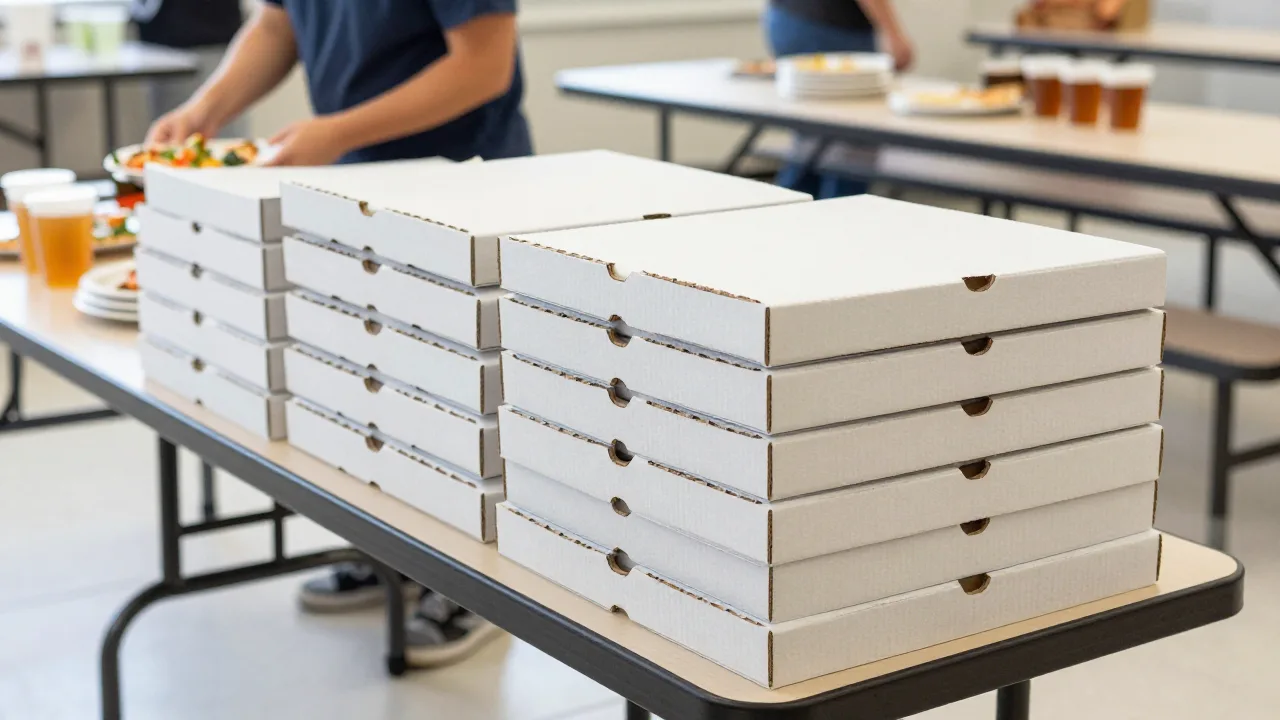
A school district's request for quotation arrives as a nine-page PDF. Page one asks for a per-serving price on a 16-week schedule. Page three wants proof of general liability insurance with the district named as additional insured. Page five asks for a product formulation statement. Page seven asks how you will handle a headcount change communicated by 9 a.m. the morning of service. Page eight is a W-9. Page nine wants a signature and a date.
For a lot of independent pizzerias, that document is where the opportunity ends. Not because the pizza isn't good enough — because nobody in the building has a folder with those items in it, and the deadline is Thursday.
Here's the problem worth naming: the catering revenue that would smooth out your slowest weeks is bought through a process most pizzerias have never set up for, and it's lost on paperwork rather than on price or product.
Why This Revenue Is Worth Chasing
Let's put numbers on what's actually being left alone.
A single elementary school running a pizza day twice a month for 240 students at $2.75 per slice-plus-drink is about $1,320 a month — roughly $12,000 across a school year, from one building, delivered in a single trip at 10:45 a.m. when your kitchen is empty. A mid-size district might have twelve buildings. An office park might have forty companies ordering lunch. A youth sports league runs eight Saturdays a season with 300 kids and parents.
Now compare the cost to serve. That $1,320 arrives as two orders, not 480 transactions. No phone time per customer, no dining room turnover, no delivery driver per household, no third-party marketplace commission of 15 to 30 percent. Institutional catering typically carries a lower gross margin percentage than a walk-in large pepperoni — and a dramatically better contribution per labor hour.
Then there's the timing. Catering demand lands at 10 a.m. on Tuesdays and 11:30 on Thursdays: exactly the hours your ovens sit idle and your morning prep crew is already on the clock. It fills the trough instead of competing with the peak. That is the rarest kind of revenue a restaurant can find.
The counterweight is real, though, and worth being honest about: this business runs on terms, paperwork, and reliability, and none of those are things a busy pizzeria is naturally organized around. Which is exactly why the shops that do organize for it face very little local competition.
Build the Packet Before You Need It
Nearly every institutional buyer asks for the same eight things. Assemble them once, keep a digital folder and a printed copy, and refresh annually.
- W-9 — signed, current, with your exact legal entity name.
- Certificate of insurance — general liability, typically $1M per occurrence, with the ability to name an additional insured on request. Your agent can issue these in a day; ask ahead of time so you're not waiting.
- Health department permit and latest inspection — buyers want the score, not just the certificate.
- Vendor registration / W-9 portal enrollment — many districts and larger employers use a supplier portal. Enroll before a bid opens.
- Allergen and ingredient statements for every item you'd serve. Schools will ask; offices increasingly do too.
- A one-page catering menu with per-head pricing, not your retail menu with a note attached.
- Sample invoice showing PO number, service date, itemization, and terms.
- Two references from existing group customers, even small ones.
Worth flagging on schools specifically: there's a meaningful difference between selling pizza for a fundraiser, a staff appreciation lunch, or an à la carte line, versus supplying meals that a district claims for federal reimbursement under the National School Lunch Program. The second involves component and nutrition requirements — whole-grain-rich crust criteria, sodium and portion standards, and product formulation documentation — that your supplier may already have available for their crust and cheese. Ask the district's food service director which category you're bidding into before you price anything, and get the specific current requirements from them in writing rather than from a blog post.
Pricing Per Head, Not Per Pie
Institutional buyers plan around a headcount and a budget line. If you quote "$18.95 per 16-inch pie," you've made them do arithmetic and compare you to a retail menu. If you quote "$2.65 per student including a slice, a cookie, and a milk," you've spoken their language and made yourself hard to compare.
Build the number properly:
| Component | Per-serving basis | Example |
|---|---|---|
| Food cost | Recipe cost ÷ servings per pie | $4.10 ÷ 8 = $0.51 |
| Add-ons | Cookie, drink, napkin/plate | $0.44 |
| Production labor | Prep block hours ÷ servings | $0.31 |
| Delivery + setup | Driver time + vehicle ÷ servings | $0.18 |
| Packaging | Boxes, sheet trays, sterno | $0.12 |
| Subtotal cost | $1.56 | |
| Target contribution | ~40–45% of price | $1.09 |
| Quoted price | $2.65 per head |
Two pricing rules that save people from themselves. Build a volume ladder — a real one, with a price break at 100, 250, and 500 servings — so growth is rewarded on paper rather than negotiated each time. And attach a fuel or commodity clause to any contract running longer than a semester; cheese markets move, and a fixed price on an 8-month term is a bet you don't need to take. If you want to sanity-check a quote against your real ingredient costs and headcount tiers, this catering calculator for per-head and per-tray pricing does the math in about two minutes, and the broader strategy of standing up this revenue stream is covered well in this overview of building a restaurant catering business.
The Operational Half Nobody Warns You About
House accounts and PO numbers
Institutional buyers pay on invoice, not at the door. Your POS needs to close a ticket to an account instead of a tender — accumulating charges across a billing period, holding a PO number per order, and producing a statement at month end. Doing this in a notebook works until you have four accounts; at eight it starts costing you money in unbilled orders. The account structure and the fields you'll need are laid out in our guide to the catering features a pizza POS actually needs.
Tax exemption per account
Districts, many nonprofits, and some institutions are sales-tax exempt and will hand you a certificate. That exemption must live on the account so it applies automatically, and the certificate needs to be on file with an expiration date you track. Charging tax to an exempt buyer means a corrected invoice; forgetting to collect from a non-exempt one means paying it yourself.
Firm cutoffs, in writing
Publish them: 48 hours for standard orders, five business days above 200 servings, final headcount changes 24 hours out. Institutional buyers work with cutoffs constantly and will not be offended. What breaks pizzerias is the accommodating yes — the same-day change on a 300-slice order that lands in the middle of Friday prep and costs you a dinner service.
Capacity math before you sign
Run the oven arithmetic before you accept a schedule. A deck oven doing 8 pies per 14-minute cycle is about 34 pies an hour. A 300-slice order is roughly 38 pies — more than an hour of continuous oven time that has to finish, be boxed, and be loaded by a hard delivery window. If that window overlaps your lunch rush, you either add a production block earlier or you decline. Deciding this at the contract stage is easy; discovering it on service day is not.
Track the account, not just the order
Catering customers are relationships with renewal dates, and they churn quietly when a contact leaves. Keep the buyer, the building, the delivery contact, the last order, and the renewal month in your customer database, then review the list quarterly. A five-minute call to a district office in June about the fall schedule is worth more than any ad you'll run that month — the same retention logic that drives repeat business on the retail side, applied to accounts worth a hundred times as much.
Real Numbers: One School, Then Nine
Illustrative scenario — a composite example built to show how the numbers work. It does not describe a real business or customer.
A family pizzeria in a mid-size Pennsylvania town started with a single elementary school's monthly PTO pizza day — 180 slices, $460, paid by check. Over two school years the owner built a document packet, added house accounts to the POS, and stopped saying yes to same-day changes. Results at the end of year two:
- Accounts served: 1 → 9 (six schools, two offices, one youth league)
- Catering revenue: $4,100 → $61,800 annually
- Share of total sales: under 1% → 8.4%
- Delivered during peak hours: 0% — every contract scheduled between 10 a.m. and 12:30 p.m.
- Average collection time: 41 days → 27 days after adding PO numbers and monthly statements
- Bids lost for missing paperwork: 2 in year one, 0 in year two
The owner's assessment: "The pizza never changed. What changed is that when the district asked for a certificate of insurance, I had it that afternoon instead of next week."
A 60-Day Plan to Land Your First Contracts
- Days 1–7: Build the packet. All eight documents, scanned, in one folder, plus a printed copy in the office.
- Days 8–14: Write a one-page catering menu. Three per-head packages, a volume ladder, cutoffs, and delivery terms on the same sheet.
- Days 15–21: Set up house accounts in your POS. Account, PO field, tax exemption flag, statement run. Test it with a fake account before a real one depends on it.
- Days 22–35: Work the near list first. The schools your own kids attend, the church two blocks over, the office park you already deliver to. Ask for the person who orders lunch, not the manager.
- Days 36–45: Call the district food service director. One question: "When do you post solicitations, and what do you need from a local vendor?" Write down the answer and calendar the date.
- Days 46–55: Run a free tasting for one building. Twenty slices to a staff room costs you $12 and puts your name in the room where the decision gets made.
- Days 56–60: Price your first real quote using the per-head build. Include the volume ladder. Do not discount to win the first one — institutional buyers renew at the price they started at, and a low anchor follows you for years.
The strategic point underneath all of this: catering revenue is the only kind that arrives on a schedule you can see months ahead. It doesn't depend on weather, it doesn't get skimmed by a marketplace, and it fills hours you're already paying for. It just requires you to be the pizzeria in town that has its paperwork in a folder — and honestly, that bar is lower than it should be. Analyzing which packages actually earn their place is the same exercise as any other menu engineering decision, just with a purchase order attached.
Frequently Asked Questions
How does a pizzeria get a school lunch contract?
Most districts buy pizza one of two ways: through a formal bid or RFP handled by the food service or purchasing department, or informally through individual schools and PTOs for events, fundraisers, and à la carte days. Start with the second — a single school's activities coordinator can approve a weekly order without a bid — and use that track record when the district's annual solicitation comes out. Ask the food service director directly when bids are posted and what documentation is required; most will tell you plainly.
What documents do institutional catering customers usually require?
Expect to provide a W-9, a certificate of general liability insurance naming the district or company as additional insured, your health department permit and most recent inspection, a completed vendor registration form, and often a sample invoice format. Schools serving federally reimbursable meals will also ask for nutrition documentation and product formulation statements. Assemble this packet once, keep it in a folder, and you can respond to a new opportunity in an afternoon instead of two weeks.
How should a pizzeria price catering for schools and offices?
Price per slice or per head rather than per pie, because that is how the buyer thinks about it. Build the number from actual food cost plus a labor allocation for the production block and the delivery, then add a margin that reflects the volume commitment. Institutional work usually carries a lower gross margin percentage than retail but a much lower cost to serve — no dining room, no phone time, one delivery for 200 servings. Watch the total contribution dollars, not the percentage.
Do schools pay with a credit card or on invoice?
Almost always on invoice against a purchase order, with net-30 terms and sometimes longer. That means your POS needs house accounts: the ability to close an order to an account rather than a payment, attach a PO number, accumulate charges across a billing period, and produce a statement. Many districts and nonprofits are also sales-tax exempt and will provide an exemption certificate, which your system must be able to apply per account so the tax never lands on the invoice.
How far in advance should catering orders be locked in?
Set a written cutoff — 48 hours for standard orders and 5 business days for anything over about 200 servings — and put final headcount changes on a shorter clock, typically 24 hours. Institutional buyers are used to these terms and will respect them if you state them upfront. The mistake is accepting a same-day change on a 300-slice order because you want to be accommodating; that one yes turns into an expectation, and the expectation eventually collides with a Friday dinner rush.
Run Catering Like a Second Business, Not a Favor
KwickOS gives pizzerias house accounts with PO numbers, per-account tax exemption, monthly statements, production scheduling for large orders, and reporting that shows what each contract really earns. Use KwickOS to turn catering into revenue you can forecast.
Get Started Free →